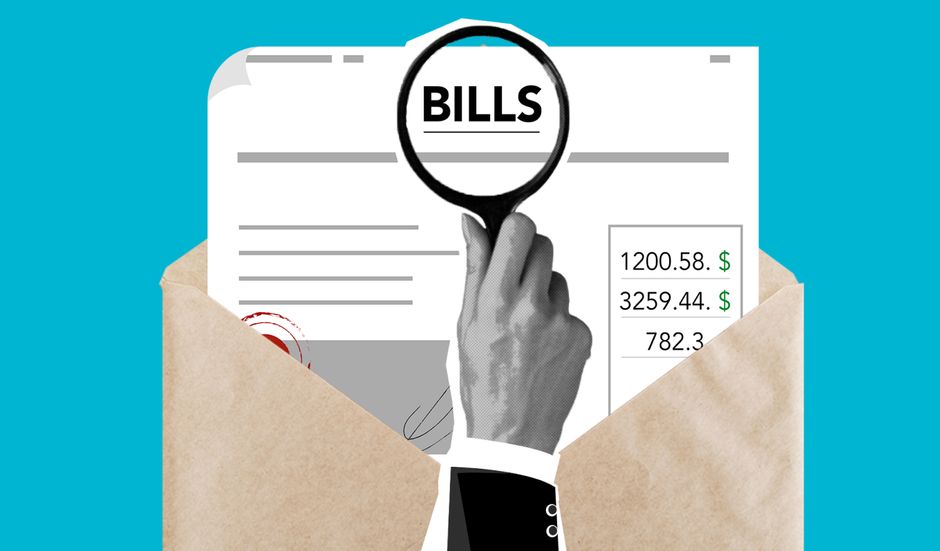
A surgical bill is one of the most negotiable large debts most people will ever face, but only if you treat the first number you see as a starting point rather than a verdict. The steps below move from lowest-cost and lowest-risk to last resort, so work them in order before you commit any money.
Free help to use first
Before you pay a surgical bill, finance it, or even agree to a payment plan, run through a short list of free options that can shrink the balance directly. Most cost nothing but a few phone calls and some paperwork, and using them first preserves leverage you lose the moment the debt moves onto a card.
- Request a fully itemized bill and audit it. Ask the billing office for a line-by-line statement rather than the summary, then check it against your insurer's explanation of benefits. Duplicate charges, services you never received, and miscoded line items are common on surgical bills, and correcting them can reduce what you owe before any negotiation begins.
- Apply for hospital charity care or financial assistance. Under IRS section 501(r), nonprofit hospitals must keep a written financial assistance policy, and many for-profit hospitals offer one too. Depending on income and household size, it can sharply lower the bill. Importantly, assistance is often available retroactively, so it can be worth applying even after you have already been billed or sent to collections. Always ask for the application directly and get the decision in writing.
- Check whether the No Surprises Act applies. This federal law protects patients from many surprise out-of-network bills, including charges from an out-of-network anesthesiologist, assistant surgeon, or other provider you did not choose during an in-network surgery. If a balance bill looks like a surprise charge, dispute it rather than pay it.
- Get free help from nonprofits. Dollar For helps patients find and apply for hospital charity care at no charge, and the Patient Advocate Foundation offers free case-management help with medical bills and insurance disputes.
Work through these before you pay or finance anything. They are free, they often produce the single largest reduction available, and several of them quietly disappear the moment a balance is moved onto a credit card.
Get an itemized bill and check for errors
Start by requesting a fully itemized bill, not the summary statement. You have the right to a line-by-line breakdown of every charge, and hospital billing is complex enough that errors are common: duplicate charges, services you never received, the wrong billing code, or a supply billed twice. Compare the itemized list against your own memory of the procedure and against the explanation of benefits (EOB) your insurer sent. The EOB shows what was billed, what insurance paid, and what you actually owe, and a mismatch between the EOB and the bill is a red flag worth disputing. If the procedure was an emergency or your insurer is involved, the federal No Surprises Act may also protect you from certain out-of-network balance bills. Catching a single coding error or a mis-applied insurance payment can cut a surgical bill substantially before you've spent a dollar, so do this step carefully and in writing.
Ask about financial assistance and charity care
Most nonprofit hospitals are required to maintain a written financial assistance policy, often called charity care, and many for-profit hospitals offer one too. Depending on your income and household size, this can reduce your bill by a large percentage or, in some cases, eliminate it entirely. The catch is that hospitals rarely volunteer this option, so you have to ask the billing or patient-advocate office directly and request the application. Eligibility is typically tied to a multiple of the federal poverty level, and you may need to submit pay stubs, tax returns, or proof of hardship. Apply even if you think you earn too much, because thresholds vary widely by hospital and some programs offer partial discounts on a sliding scale. Ask whether applying pauses collection activity while your application is reviewed, and get the decision in writing. This step is free to pursue and can produce the single largest reduction available, so never skip it on a large surgical balance.
Negotiate a payment plan or discount
If you don't qualify for charity care, or you qualify for only a partial reduction, the next step is to negotiate directly with the billing office. Two levers tend to work. First, ask for a prompt-pay or self-pay discount: many hospitals will knock a meaningful percentage off the balance if you can pay a lump sum, and some will accept a reduced figure simply because collecting in full is uncertain. Second, ask for an interest-free, no-fee payment plan you can actually afford month to month. Many hospitals offer in-house plans, and an in-house plan typically keeps the debt out of collections and off your credit report. Be wary of being steered toward a third-party medical credit card or financing product, which can carry deferred interest that becomes expensive if you miss the payoff window. Put your monthly budget number on the table, ask what they can do, and get any agreement in writing before you make the first payment.
Should you put surgery bills on a credit card or CareCredit?
It is tempting to clear a surgical bill by charging it to a credit card or a medical credit card such as CareCredit, but for most people this is a costly move. A hospital bill is unsecured medical debt that is usually negotiable, frequently carries no interest while it sits with the provider, and benefits from medical-debt protections. Moving it onto a card converts it into ordinary card debt that typically charges high interest from the day you carry a balance, and it strips away the protections and leverage tied to medical debt specifically.
Two things you give up are easy to overlook. First, once the bill is paid by card, you generally lose any remaining ability to apply for the hospital's charity care or financial assistance, since there is no longer a hospital balance to forgive. Second, you forfeit No Surprises Act leverage on a disputed surprise bill, because paying it removes your strongest reason to challenge it. A no-interest, no-fee hospital payment plan, or financial assistance, is almost always cheaper than a card.
Deferred-interest financing like CareCredit deserves extra caution. These plans advertise a promotional no-interest window, but if any balance remains when that window closes, interest is often charged retroactively on the entire original amount from the date of the purchase, not just on the leftover balance. One missed deadline can turn what looked like an interest-free plan into one of the most expensive ways to carry a surgical bill. Exhaust the free help, financial assistance, and the hospital's own plan before you consider any card.
Settlement for large balances
If a large surgical balance has already gone to collections and you can't cover it through a plan, debt settlement may be worth considering. Settlement applies to unsecured debt, which medical bills are, and it involves negotiating with the collector to accept less than the full amount. You can attempt this yourself, or a debt settlement company can negotiate on your behalf, typically for unsecured balances of roughly $7,500 or more. Understand the trade-offs first. Under the FTC's Telemarketing Sales Rule, a settlement company cannot charge upfront fees and may collect only after a debt is actually settled; fees generally run 15-25% of the enrolled debt. Settling can lower your credit score, and forgiven debt over $600 may be reported on an IRS Form 1099-C and treated as taxable income. Results are not guaranteed and depend on the creditor. Weigh these costs against the size of the balance and your other options before enrolling.
Medical debt and your credit
Medical debt is now treated differently from most other debt on your credit reports, which buys you time. The three nationwide credit bureaus no longer include paid medical collections on reports, and they wait at least one year before reporting an unpaid medical collection, giving you a window to dispute errors, apply for assistance, or arrange a plan. The bureaus have also stopped reporting medical collection balances under a set dollar threshold. The Consumer Financial Protection Bureau (CFPB) has worked to further limit how medical debt is factored into lending decisions, so a surgical bill may carry less weight than an old credit-card collection would. None of this means you can ignore the bill, but it does mean a large balance is unlikely to wreck your credit overnight. Use that breathing room: pull your reports, dispute anything inaccurate, and pursue the assistance and negotiation steps above before the account ever has a chance to age onto your credit file.